How to Groom a Cocker Spaniel at Home: Step-by-Step Guide
Learn how to groom a Cocker Spaniel at home: brushing, bathing, clipping, ear care and nails, plus the tools, blade numbers and schedule that work.
On this page
Learning how to groom a Cocker Spaniel at home saves money, but it also keeps your dog healthier. The Cocker Spaniel's silky, medium-length coat grows long feathering on the ears, chest, belly and legs. Left alone, that hair tangles into mats within days, traps moisture against the skin and hides problems such as hot spots, ticks and skin infections.
The good news: with the right tools and a simple routine, most owners can handle brushing, bathing, trimming and nail care between professional appointments. This guide walks through every step, from line brushing to clipping with the correct blade numbers, and explains what is different about American and English Cocker Spaniels.
Cocker Spaniel Coat Basics
Before you pick up clippers, it helps to understand what you are working with.
- Silky top coat with a soft undercoat. The coat is fine and flat or slightly wavy. The undercoat packs into mats behind the ears, in the armpits and under the collar.
- Heavy feathering. The long hair on the ears, chest, belly and legs is the part that tangles fastest.
- Long, pendulous ears. Heavy ear leather limits airflow into the ear canal, which is one reason Cocker Spaniels are prone to ear infections (otitis externa).
- Skin sensitivity. The breed is known for skin conditions such as seborrhea, so regular grooming doubles as a weekly skin check.
American vs English Cocker Spaniel: The American Cocker Spaniel, a member of the AKC Sporting Group, usually carries more coat and is commonly clipped on the back with longer skirting. The English Cocker Spaniel has a slightly less profuse coat. Show English Cockers are traditionally hand-stripped and scissored rather than clipped, but most pet owners of either breed choose a clipped style because it is easier to maintain.
Tools You Need to Groom a Cocker Spaniel
| Tool | What it does |
|---|---|
| Slicker brush | Removes loose undercoat and works through small tangles |
| Steel greyhound comb | Checks for hidden mats down to the skin |
| Pin brush | Gentle brushing for long ear and leg feathering |
| Dematting tool | Splits tight mats without pulling the skin |
| Dog clippers with detachable blades | Body, head and sanitary clipping |
| Blades and guard combs (#10, #7F, #4F) | Different lengths for different areas |
| Thinning shears and curved scissors | Blend lines and shape feet and feathering |
| Paw trimmer | Clears hair between paw pads |
| Nail grinder or clippers | Keeps nails short so the feet stay tight |
| Dog shampoo, conditioner and a dryer | Clean, tangle-free coat that clips evenly |
Cocker Spaniel hair is thick enough to stall weak trimmers, so the clipper matters most. We compared the options in our guide to the best dog clippers for Cocker Spaniels. If you want a quiet cordless option for home use, our Oneisall dog clippers review covers seven models. Avoid using human hair clippers on the body; our dog clippers vs human clippers guide explains why they pull and overheat in a Cocker coat.
Common clipper blade numbers for Cocker Spaniels
| Blade | Approximate length left | Typical use |
|---|---|---|
| #10 | about 1/16 inch (1.5 mm) | Sanitary area, belly, paw pads, inside of ears |
| #7F | about 1/8 inch (3 mm) | Short pet trim on the back and neck |
| #4F | about 3/8 inch (9.5 mm) | Longer, softer body trim |
| Guard combs | 1/2 inch and longer | Fluffy puppy cut, legs and skirt |
The "F" means a finish blade, which leaves a smoother result on silky coats. Exact lengths vary slightly by brand.
Tip: Never clip a dirty or matted Cocker coat. Dirt dulls blades quickly, and blades snag on mats, which pulls the skin and can cause clipper burn.
Step 1: Brush Out the Coat Before Anything Else
Brushing comes first because water tightens mats. Brushing also removes loose undercoat so shampoo can reach the skin.
- Start with a slicker brush. Use short, light strokes in the direction the hair grows.
- Line brush the feathering. Hold the hair up with one hand, brush a thin layer down, then move up a line. This reaches the undercoat instead of skimming the top.
- Follow with a steel comb. If the comb catches, there is still a tangle.
- Focus on mat zones: behind and under the ears, the armpits, the collar line, the belly and the back of the legs.
- Work mats out gently. Hold the hair at the base, close to the skin, and tease the mat apart from the outside in with the comb or a dematting tool.
If a mat sits tight against the skin, do not try to cut it out with scissors. Shave under it with a #10 blade, or ask a groomer to do it. Many grooming injuries happen when owners cut mats with scissors.
Clean slicker brushes after each session so they keep working well. Our guide on how to clean your dog brush shows the quick method. If your Cocker comes in from a walk with seed heads in the feathering, follow our steps for getting burdocks out of dog hair before brushing.
Step 2: Check and Clean the Ears
Ear care is the part of Cocker Spaniel grooming that owners skip most, and the part vets mention most.
- Lift each ear and look inside. A healthy ear is light pink with little odor.
- Apply a vet-recommended ear cleaner, massage the base of the ear for 20 to 30 seconds, then let your dog shake.
- Wipe the visible part of the ear with a cotton ball. Never push cotton swabs into the ear canal.
- Keep the hair under the ear flap and around the ear opening short so air can circulate.
Vet note: Redness, a dark or yellow discharge, a sour smell, head shaking or scratching at the ears are signs of a possible ear infection. See your veterinarian rather than cleaning more often.
Step 3: Bathe Your Cocker Spaniel
Bathe after brushing and before clipping. A clean coat clips evenly and helps blades last longer.
- Use lukewarm water and a dog shampoo. Human shampoo has the wrong pH for dog skin.
- Wet the coat completely down to the skin. Cocker coats shed water, so this takes longer than you expect.
- Lather from the neck back, then the legs and feathering. Clean the face with a damp cloth.
- Rinse until the water runs clear. Leftover shampoo is a common cause of itchy, flaky skin.
- Apply a conditioner to the ears and feathering to reduce tangles.
- Squeeze out water and towel dry gently without rubbing, which creates knots.
Drying matters. Use a pet dryer on a low or cool setting and brush while drying. This "fluff drying" straightens the hair so it clips evenly and stops damp undercoat from matting. Make sure the coat is fully dry before clipping.
Step 4: Clip the Body
A clipped body is the core of most Cocker Spaniel pet trims. Take your time and keep sessions short if your dog is new to clippers.
- Choose your length. A #7F gives a neat, short back. A #4F or a guard comb leaves more coat.
- Start at the base of the skull and clip down the neck and back, always with the direction of hair growth.
- Clip the sides down to roughly the elbow line, where the skirt or feathering begins.
- Keep the blade flat against the coat. Tipping the blade edge digs in and leaves lines.
- Check blade heat every few minutes by touching it to your inner wrist. Swap blades or use blade coolant if it feels warm. Hot blades cause clipper burn.
- Blend the skirt. Use thinning shears where the clipped back meets the longer belly hair so there is no harsh line.
Warning: Be extra careful around loose skin in the armpits, flanks and the folds of the lips. Stretch the skin flat with your free hand before clipping these areas.
Step 5: Trim the Head, Face and Ears
- Top of the head: Clip with a #7F or #10 from the eyebrows back over the skull. Leave a little more hair above the eyes if you prefer a softer look.
- Cheeks and throat: Clip down to about where the neck meets the chest.
- Ears: Many owners clip the top third of the outer ear and the inside of the ear flap with a #10, then scissor the edges of the leather into a neat line. Run a finger along the ear edge before scissoring so you never cut skin.
- Eyes: Use rounded-tip scissors to trim hair that touches the eyes. Wipe tear staining with a damp cloth daily.
Step 6: Feet, Paw Pads and Sanitary Trim
Hair between the pads collects mud and burrs and makes dogs slip on hard floors.
- Clip the hair between the paw pads with a #10 blade or a paw trimmer.
- Scissor around the edge of each foot into a round "cat foot" shape.
- Do a sanitary trim with a #10 blade around the genitals and under the tail to keep these areas clean.
Step 7: Trim the Nails
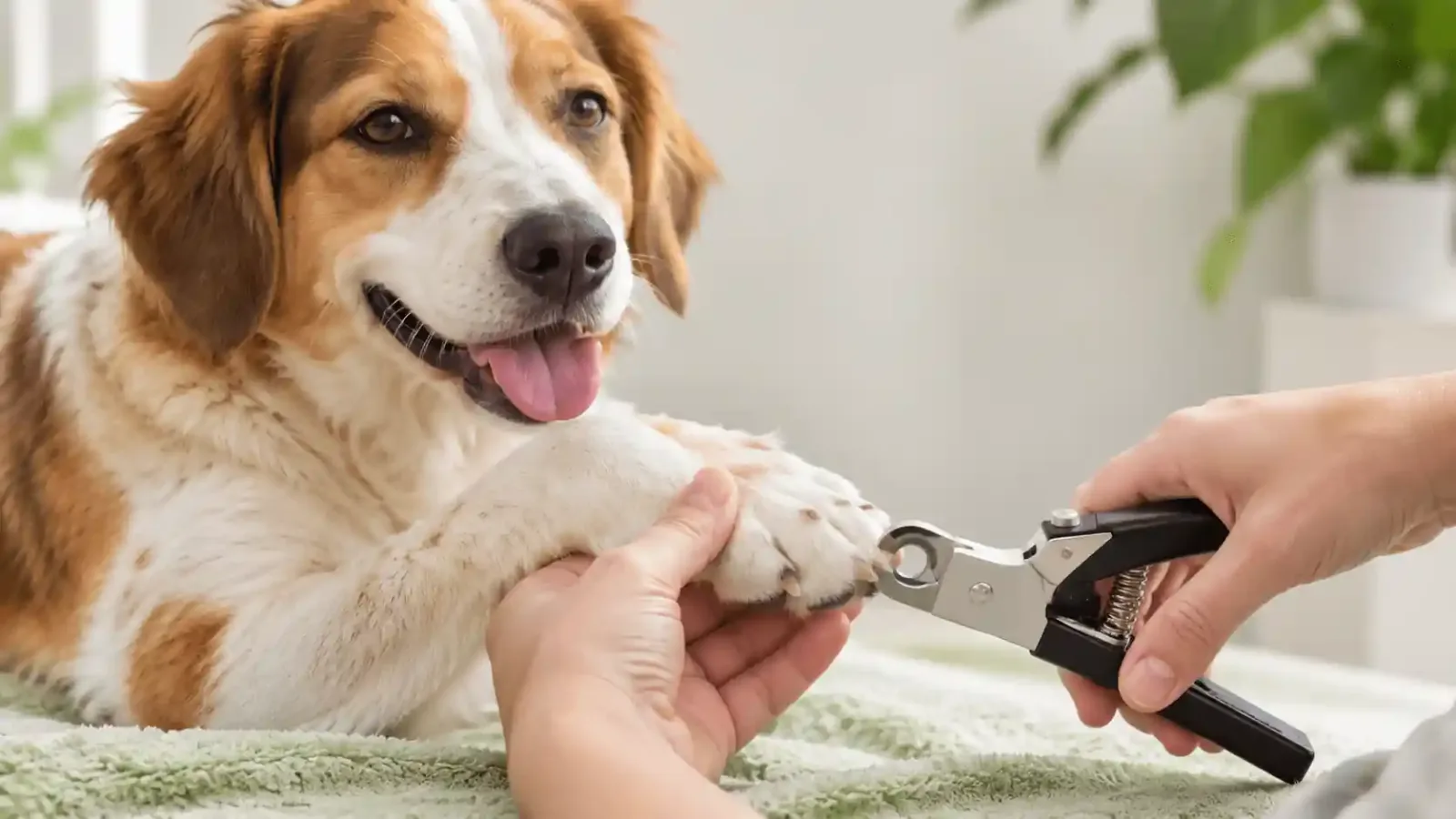
Long nails splay the toes and change how a dog stands. Cocker Spaniels can have light or dark nails. Light nails show the pink quick; dark nails do not, so take off tiny amounts at a time. Our guide on how to cut black dog nails explains how to find the quick from the cut surface.
Many owners find a grinder easier than clippers on a fidgety spaniel because it shortens the nail gradually and leaves a smooth edge. See our tested picks for the best dog nail grinders if you are choosing one.
Popular Cocker Spaniel Haircuts
| Style | Description | Maintenance |
|---|---|---|
| Puppy cut | Even length all over, often with a guard comb | Easiest to keep up; trim every 6 to 8 weeks |
| Sporting or field cut | Short body and head, shortened feathering on legs and ears | Practical for active, outdoor dogs |
| Pet trim with skirt | Clipped back with longer belly and leg feathering | Classic look, needs frequent brushing |
| Show trim | Full feathering, hand-stripped or scissored | Best left to professional groomers |
How Often Should You Groom a Cocker Spaniel?
| Task | How often |
|---|---|
| Brushing and combing | 3 to 4 times a week, daily for full coats |
| Ear check and cleaning | Weekly, and after swimming or baths |
| Bath | Every 4 to 6 weeks, or when dirty |
| Full trim or haircut | Every 6 to 8 weeks |
| Nail trim | Every 3 to 4 weeks |
| Paw pad and sanitary trim | Every 2 to 4 weeks |
A shorter puppy or field cut stretches the time between haircuts. For a breed-by-breed look at trim schedules, read our guide on how often you should cut your dog's hair.
When to Use a Professional Groomer
Home grooming works well for maintenance, but book a professional when:
- The coat is matted close to the skin over large areas.
- Your dog panics, snaps or cannot be handled safely.
- You want a show trim or a precise scissored finish.
- You notice skin sores, lumps, a strong odor or ear discharge. In that case, see a veterinarian first.
Many owners use a groomer every second or third trim and handle brushing, baths, feet and nails at home in between.
Recommended gear: best dog clippers for Cocker Spaniels · Oneisall dog clippers review · best dog nail grinders
Related guides: Dog Clippers vs Human Clippers · How to Clean Your Dog Brush · How Often Should You Cut Your Dog's Hair?
Trusted sources: Cocker Spaniel breed information (American Kennel Club) · Dog Grooming at Home (American Kennel Club) · Dog Grooming Tips (ASPCA)
Frequently asked questions
What blade should I use on my Cocker Spaniel?
Most owners use a #7F blade for a short body trim and a #4F for a longer, softer look. Use a #10 blade for the sanitary area, belly, paw pads and the inside of the ears. Guard combs leave the coat longer for a puppy cut.
Can I groom my Cocker Spaniel myself?
Yes. Most Cocker Spaniel owners can handle brushing, bathing, ear cleaning, nail trims and a basic clipped pet trim at home with good clippers and some patience. Leave severe matting and show trims to a professional groomer.
Should you shave a Cocker Spaniel?
A short clip is fine for pets, but avoid shaving down to the skin on the body. A very close shave can cause clipper burn and leave the skin exposed to sunburn. A #7F or longer blade keeps the coat short without exposing the skin.
How do I stop my Cocker Spaniel's ears from matting?
Comb the ear feathering every day or two, especially behind and under the ear. Apply a light conditioner after baths, and keep the hair under the ear flap trimmed short. Short ear hair also improves airflow and helps reduce ear infections.
How long does it take to groom a Cocker Spaniel at home?
A full groom with brushing, bath, drying, clipping, ears and nails usually takes 2 to 3 hours for a beginner. Splitting it into shorter sessions over two days is easier on both you and your dog.
Why does my Cocker Spaniel smell even after a bath?
Common causes are yeast in the ears, damp undercoat that was not fully dried, skin conditions such as seborrhea, or dental disease. Dry the coat completely after baths, and see your vet if the odor returns quickly.
Conclusion
Grooming a Cocker Spaniel at home comes down to a steady routine: brush the coat and feathering several times a week, clean the ears weekly, bathe before you clip, and use the right blade for each area. With good clippers, a steel comb and short, calm sessions, you can keep your spaniel comfortable and mat-free between professional appointments.